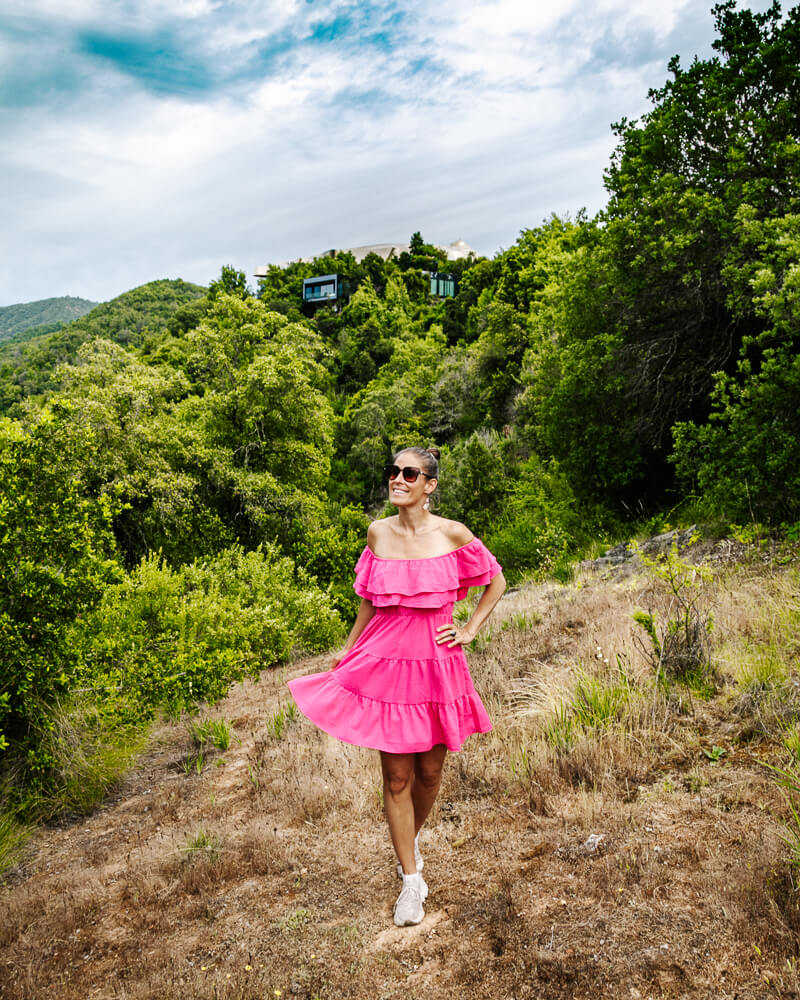
On Peru’s northern coast, far from the crowds of Máncora, lies Cabo Blanco. This small fishing village sits along a spectacular bay, where the dry desert landscape of Piura meets the deep blue Pacific Ocean. Cabo Blanco is not a destination where you come to spend your days ticking off sightseeing attractions. You come here for the ocean. To surf, spot whales, go boating and fishing, and above all, to do absolutely nothing for a while. Curious? In this article, I’ll tell you more about the best things to do in Cabo Blanco and why you should visit this destination during your trip through Peru.
Cabo Blanco has a remarkable story. In the 1950s, this small fishing village became an internationally known destination for sport fishing and surfing. Ernest Hemingway also came here to fish for marlin in 1956. Today, Cabo Blanco is attracting attention once again, partly thanks to the arrival of the new Inkaterra Cabo Blanco hotel.
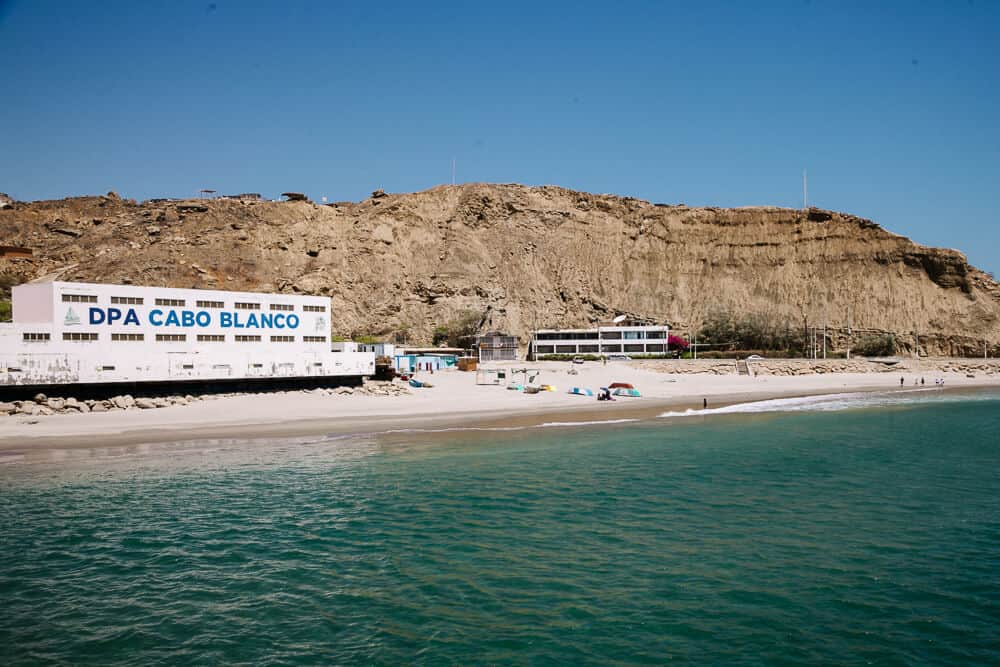
Cabo Blanco is located in Peru’s Piura region, about 25 miles north of Talara. From the Pan-American Highway, a road leads from the town of El Alto through the hills toward the coast. Below lies the small bay of Cabo Blanco, surrounded by a rocky coastline and a dry desert landscape.
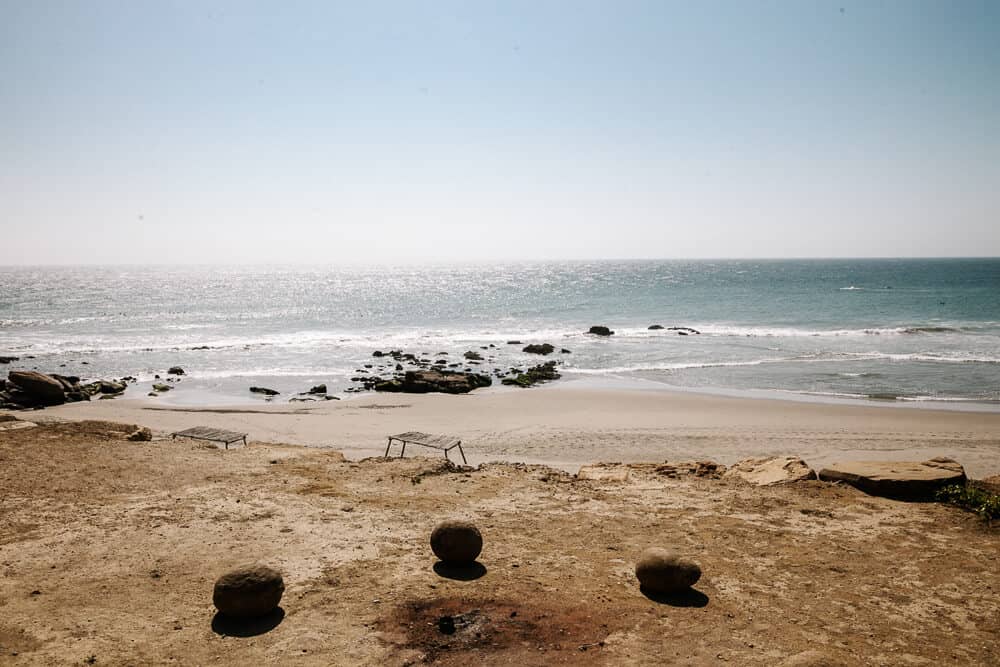
DThe combination of desert and ocean makes the area particularly special. The water here is warm and clear, and the coastline feels rugged and unspoiled. In 2025, Cabo Blanco was also officially designated a national tourist attraction. The area is part of the protected Reserva Nacional Mar Tropical de Grau marine reserve.
Cabo Blanco still feels like a place where life revolves around the ocean. Fishermen head out to sea every day, and the waves set the rhythm of daily life. There is plenty to enjoy here. Have fun exploring this beautiful region and tips for things to do in Cabo Blanco Peru.
Simply start at the beach. Playa Cabo Blanco is not particularly large, and that is exactly what makes it so appealing. There is no long boardwalk lined with restaurants and souvenir shops, just a small bay with fishing boats, rocks, and the Pacific Ocean stretching out in front of you.
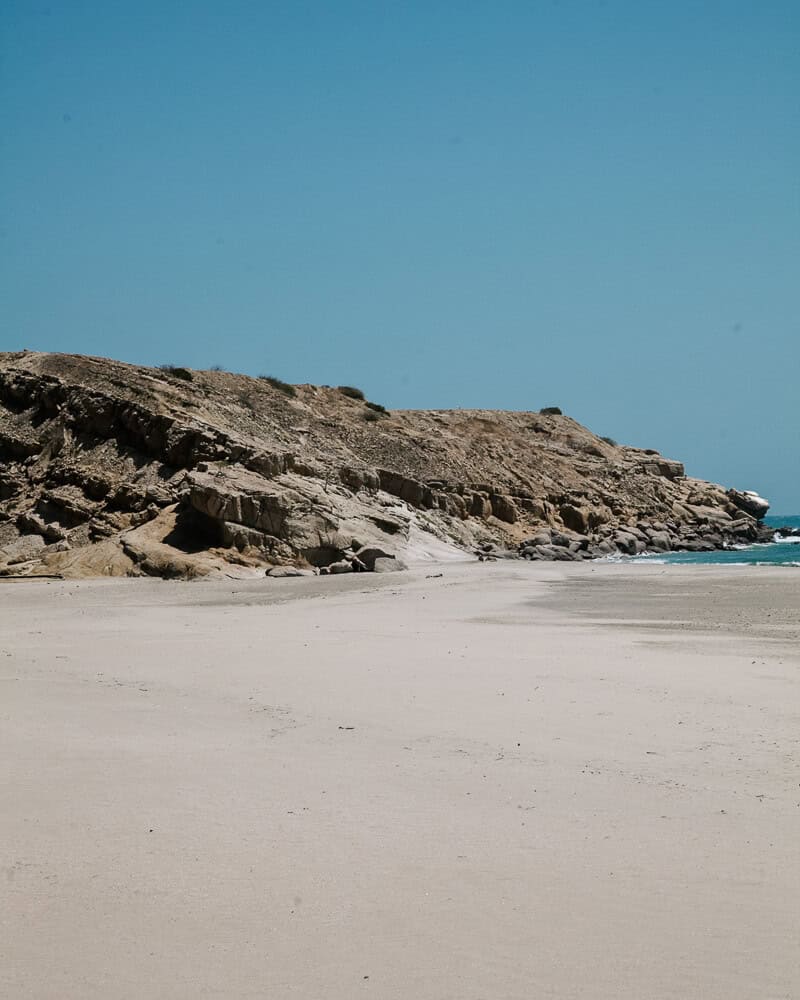
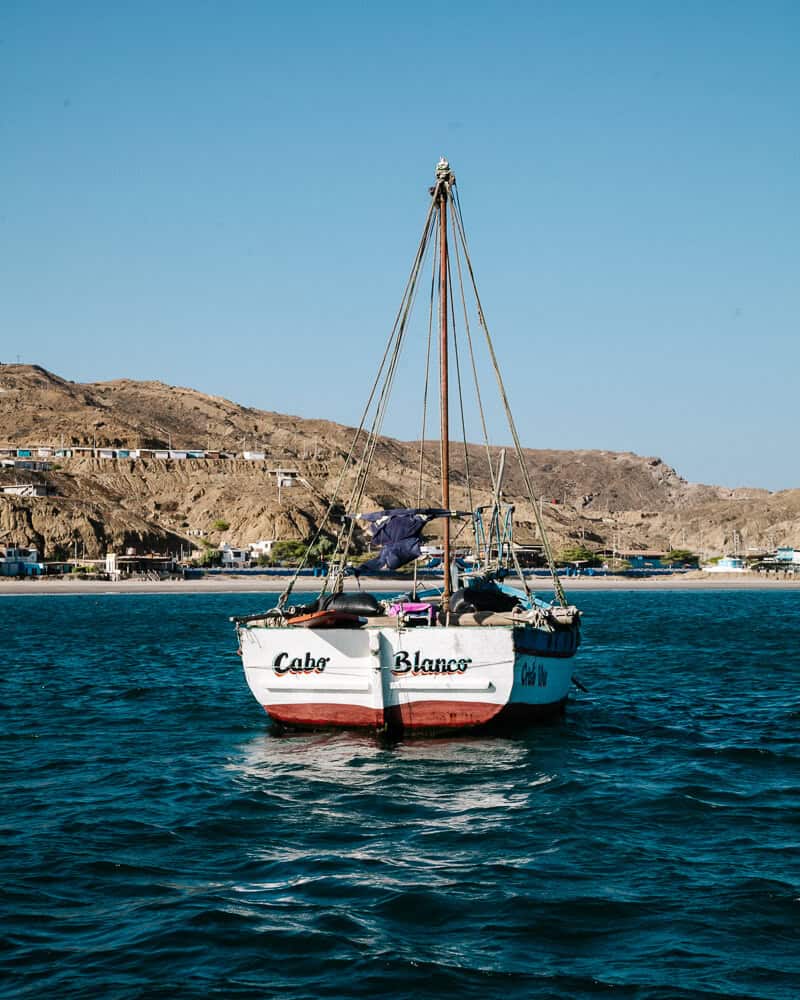
The beach is a lovely place to swim, take a walk, or simply do nothing for a few hours. Be sure to take in the landscape around the bay, too. The combination of the dry, almost desert-like inland terrain and the deep blue water is typical of Peru’s northern coast. The light is especially beautiful in the late afternoon, making this a wonderful spot to watch the sun slowly disappear into the ocean.

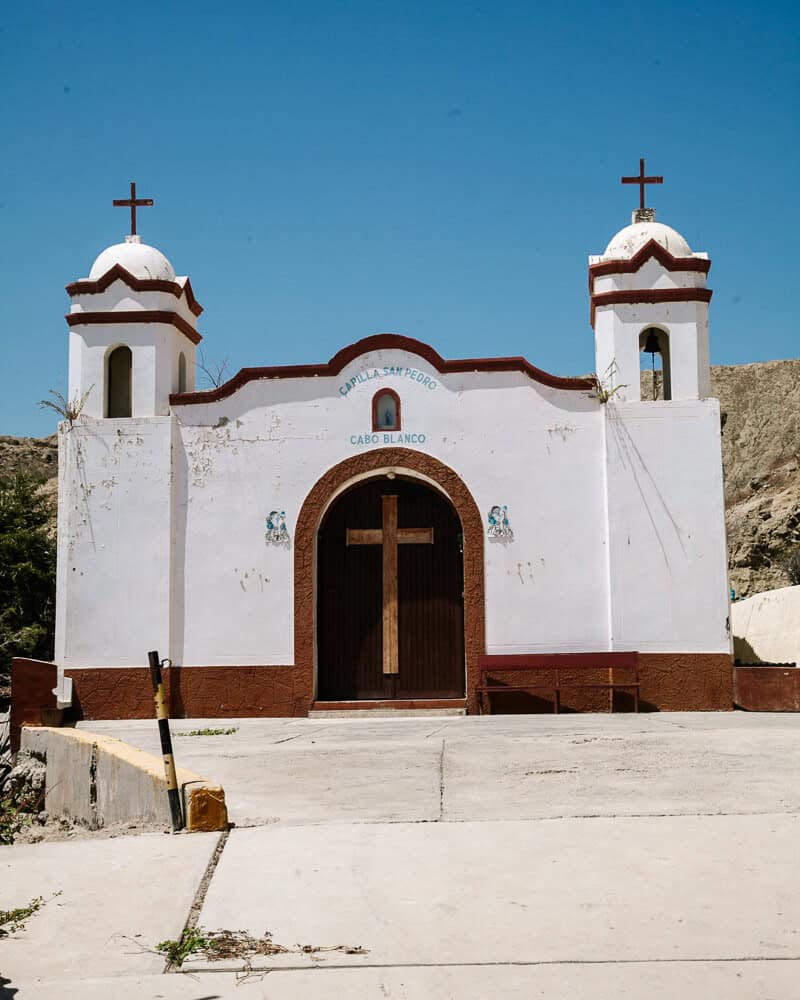
Take some time to explore the village itself, too. Cabo Blanco is still a small fishing village. Walk along the coast, look at the fishing boats moored in the caleta (small fishing harbor), and take a stroll through the village, where you can also see the small church. It gives you a glimpse of everyday life, which here remains closely connected to the ocean.
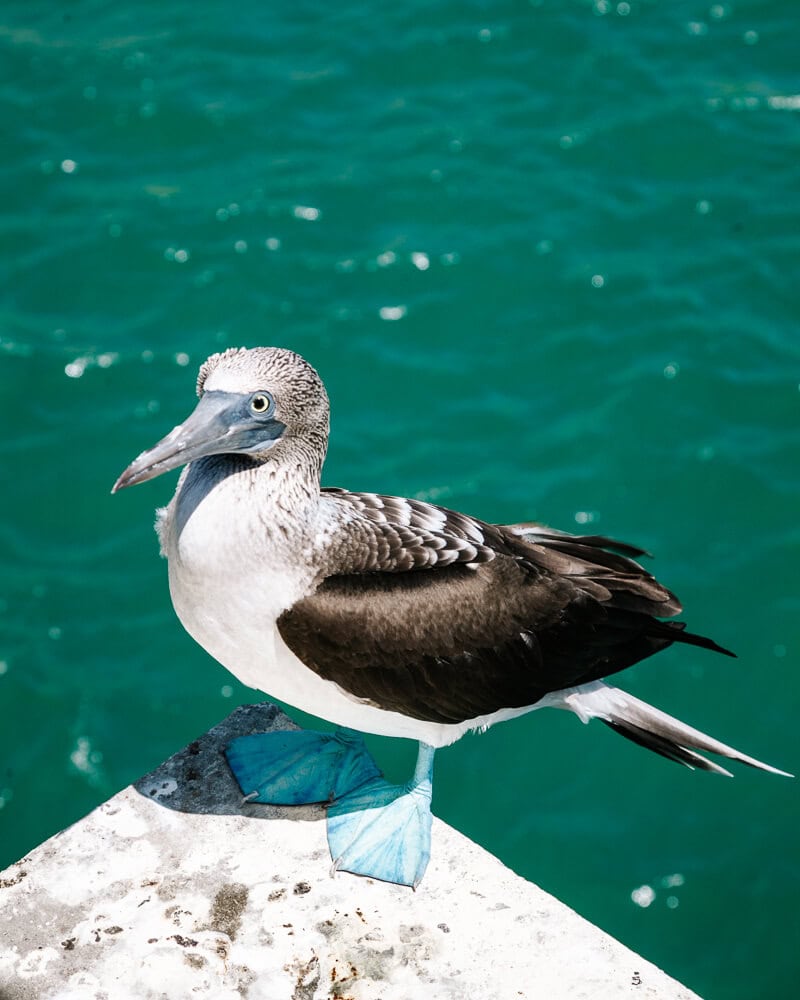
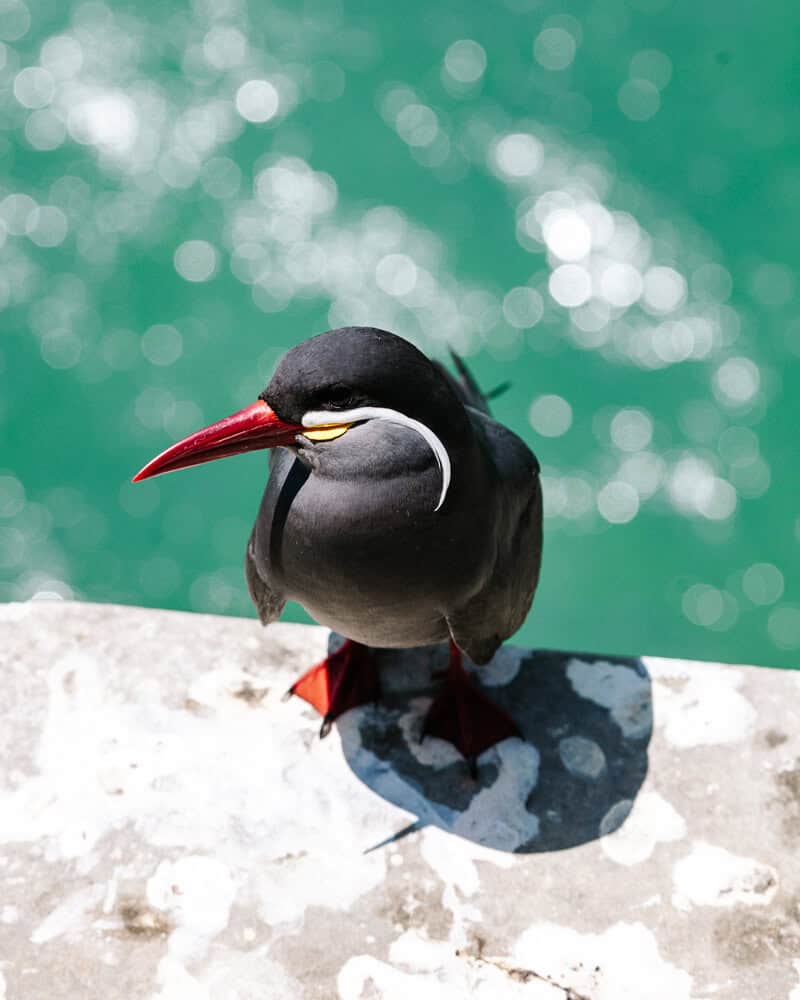
You’ll also come across plenty of birds along the way. Pelicans and blue-footed boobies are regularly spotted along the coast, and with a little luck, you may even see sea lions or sea turtles in the water.
One of the reasons to visit Cabo Blanco Peru and best things to do between July and November is the annual arrival of humpback whales. Every year, these animals travel from Antarctic waters to the warmer waters off Peru’s northern coast. They come here to mate, give birth, and raise their calves.
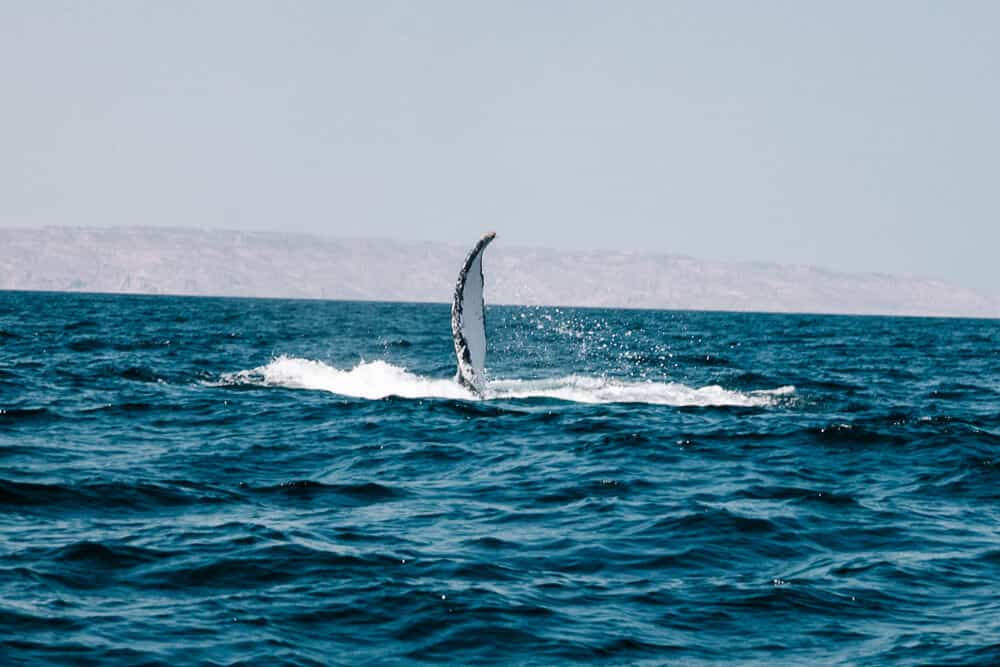
From the town of Los Órganos and other coastal towns in the area, you can head out to sea on a whale-watching excursion. Perhaps the most exciting moment is when you have been watching the water for a while without seeing anything, and suddenly an enormous tail appears above the surface. Or when you first spot the characteristic spout of a whale.
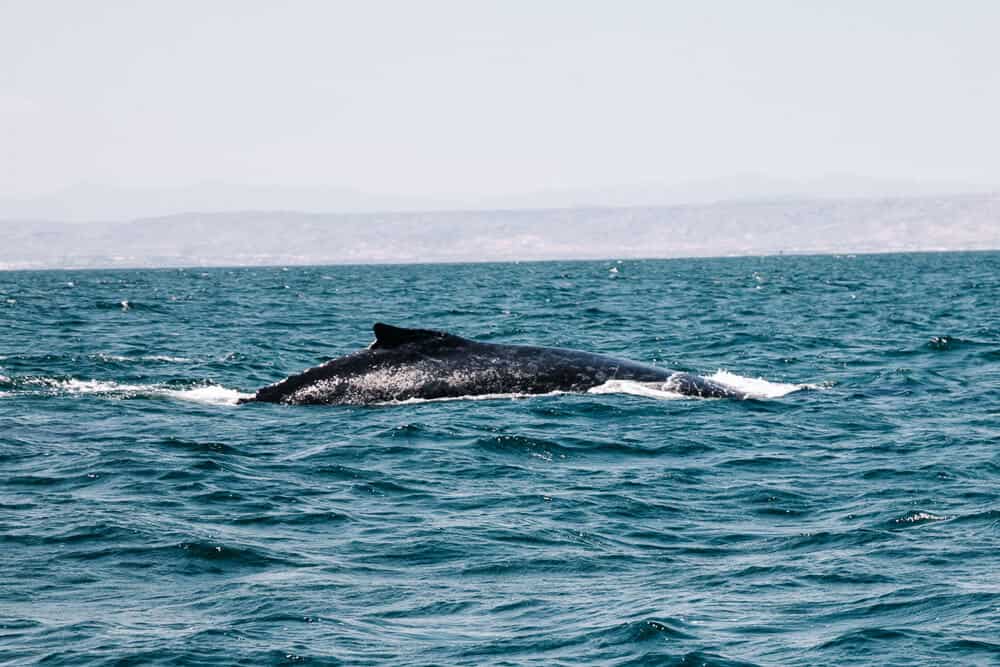
A whale-watching trip naturally depends on the animals and their behavior, so sightings can never be guaranteed. Choose an operator that treats the animals responsibly and keeps a sufficient distance, such as this tour or Pacifico Adventures.
One of the things to do if you really want to experience Cabo Blanco in Peru is to join a local fishing boat. For excursions with Hijos del Viento, a company founded by fishermen and their families, you’ll need to get up early. The boat departs between 5:30 and 6:00 a.m., just as the sun appears above the horizon.
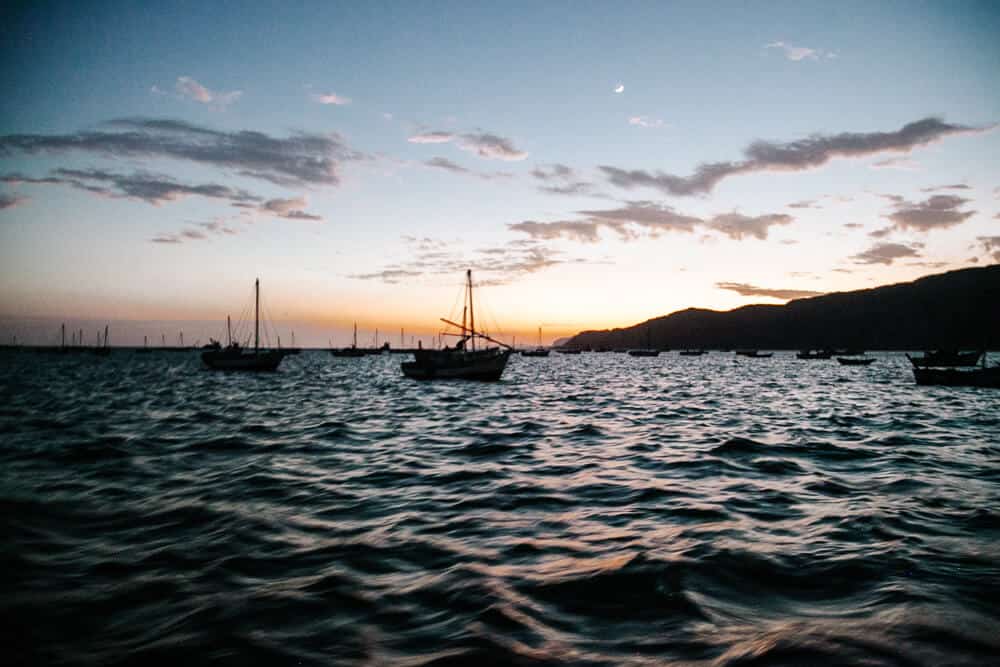
And believe me, you don’t want to miss it. As the first rays of sunlight slowly illuminate the coast and the water, the ocean comes to life. You’ll see birds making their first dives of the day, local fishermen heading out to sea in their boats, and, with a little luck, whales surfacing in the distance.
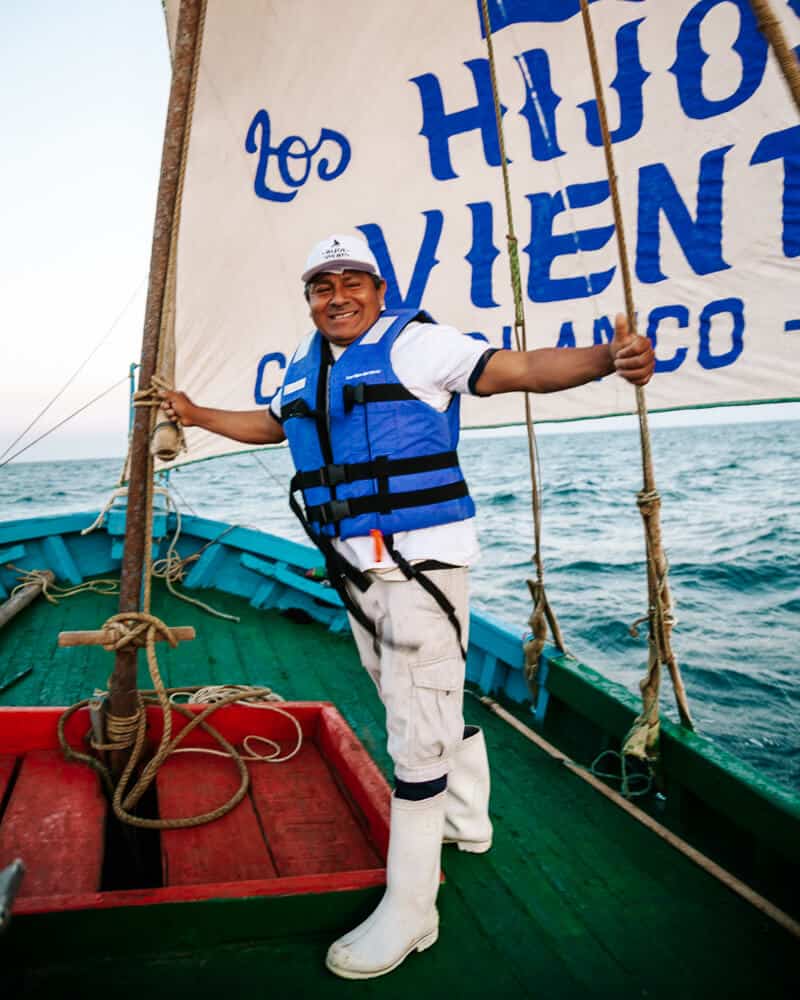
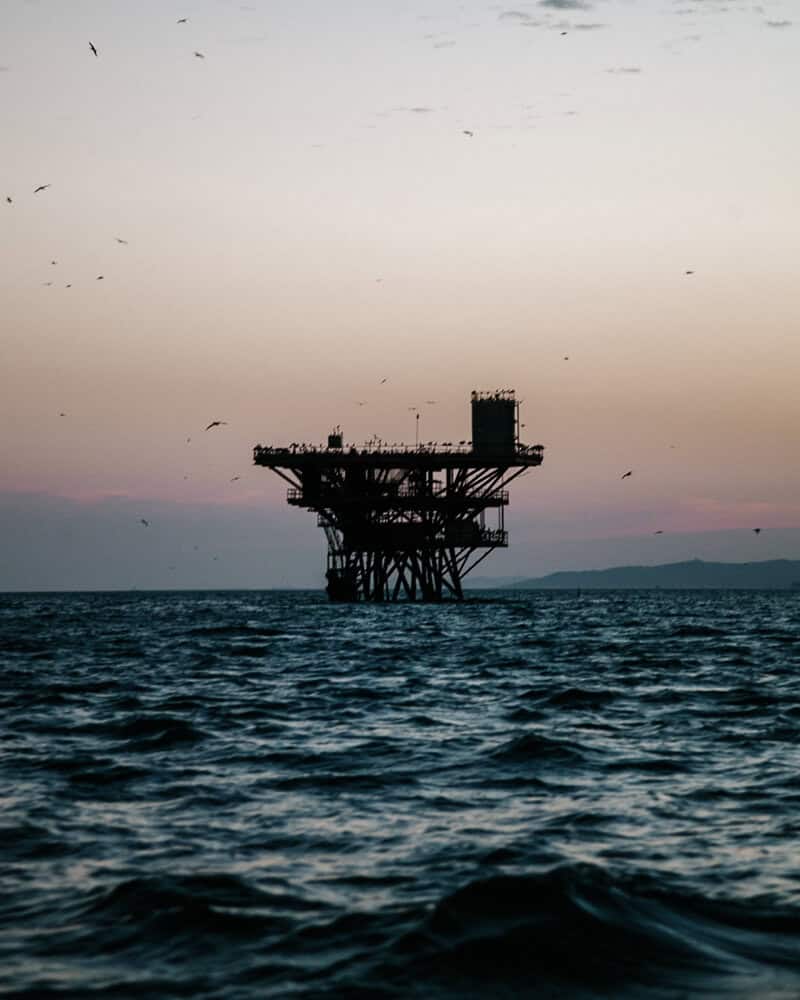
Along the way, you’ll also see how local fishermen have made their living using traditional methods for generations. And you certainly don’t have to be interested in fishing to enjoy this experience. In fact, even if you don’t like fishing, I would still recommend this excursion. It is much more about being out on the ocean, taking in the landscape, watching the seabirds, and seeing the everyday lives of local fishermen. You can book a tour that takes you out to sea on a local fishing boat and includes the chance to make your own ceviche afterward here.
One small warning: save breakfast until after the boat trip. The ocean can get quite rough, and you really feel the waves on a small local fishing boat. An empty stomach is not a bad idea.
Cabo Blanco in Peru is a legendary name among surfers. The place is known for a fast left-hand wave that many surfers consider one of the best in Peru. The wave is fast and requires a quick takeoff; depending on the conditions, the waves can reach several meters in height. For experienced surfers, this is a very different experience from the more accessible beaches around Máncora.
The best surfing conditions are generally found between October and January, when swells from the north create good waves. Don’t have much experience yet and want to learn how to surf? You can book surf lessons here. Not a surfer at all? Then be sure to find a spot on the beach or along the waterfront and watch the surfers in action.
Right next to Cabo Blanco is Panic Point, a wilder stretch of coastline that is well known among surfers. It is a beautiful place to explore more of the coast and watch the surfers at work.
The waters off the coast of Cabo Blanco are known for their large fish species, including marlin and tuna. The town became famous in the 1950s for several record catches, including an enormous 1,560-pound black marlin caught in 1953 by Alfred Glassell Jr. aboard the Miss Texas.
Sport fishing is still an important part of Cabo Blanco today. I’m not much of a fishing enthusiast myself, but if you enjoy heading out to sea, a fishing excursion is truly one of the best things to do in Cabo Blanco Peru.
The story of Cabo Blanco in Peru is inseparable from Ernest Hemingway. On April 16, 1956, the American writer arrived in Cabo Blanco with his wife, Mary Welsh. He came to fish for the large marlin. Hemingway headed out to sea aboard the Miss Texas, during the period when he was involved in the film adaptation of The Old Man and the Sea.
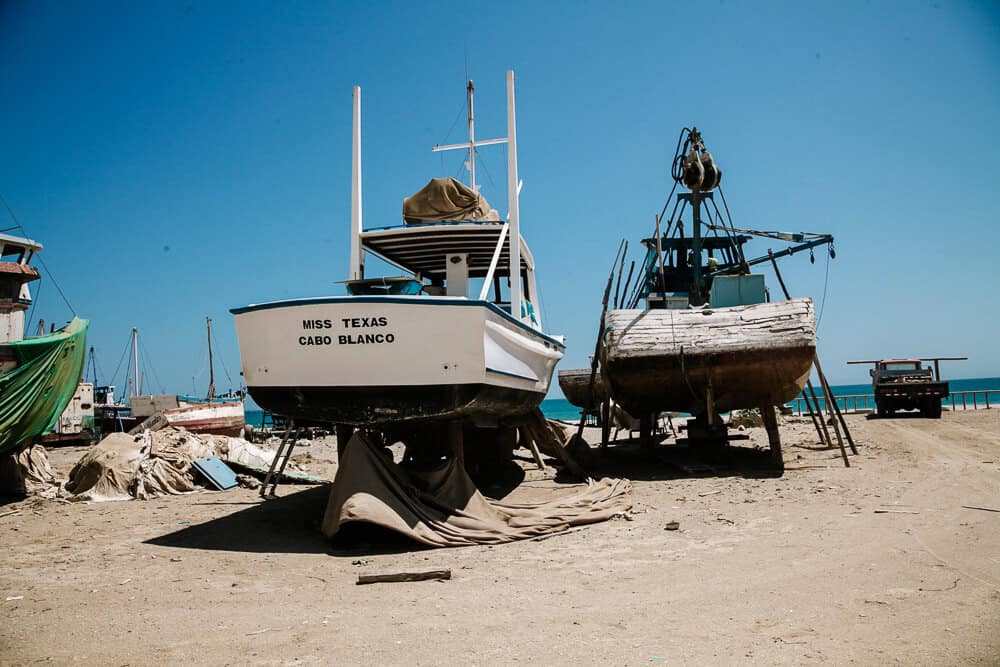
It is a lovely story to keep in mind when you are in Cabo Blanco and look out at the fishing boats on the water. This is where literature, film, and the centuries-old relationship between people and the ocean come together.
One interesting detail is that the historic Miss Texas has since been restored by Inkaterra Hotel and is ready to head out onto the water, giving you the chance to follow in Hemingway’s footsteps.
For a good lunch by the ocean, head to Restaurant Cabo Blanco. The restaurant is located right on the beach, overlooking the Pacific. The menu features fresh fish and seafood, ceviche, fish fillets, and classics such as pulpo al olivo (octopus in olive sauce). The ceviche and fresh fish are particularly worth trying.
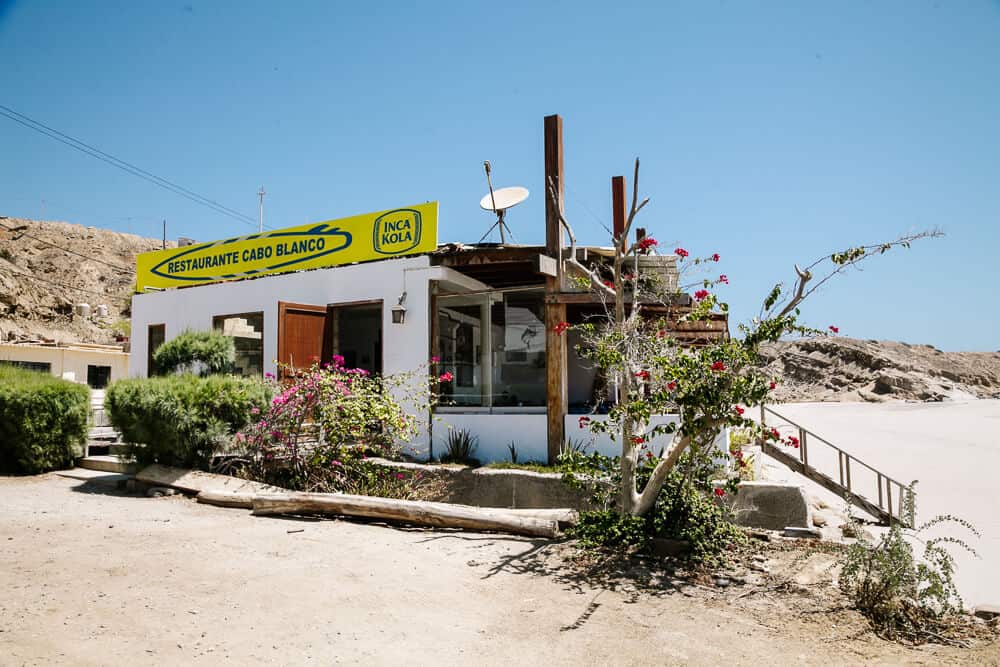
There is also a special connection to Cabo Blanco’s history. The owner’s father worked as a bartender during Ernest Hemingway’s stay in 1956. The restaurant still has photographs from that time on display, as well as books about Hemingway and his visit.
Want to experience Cabo Blanco in style? Then Inkaterra Cabo Blanco is a wonderful place to stay. The hotel is located about two kilometers south of the Cabo Blanco caleta, right on the coast, and has been designed around the surrounding desert and ocean landscape. The hotel has thirteen suites with ocean views. Each suite has a private terrace and plunge pool and is designed with natural materials and a beautiful calm style.
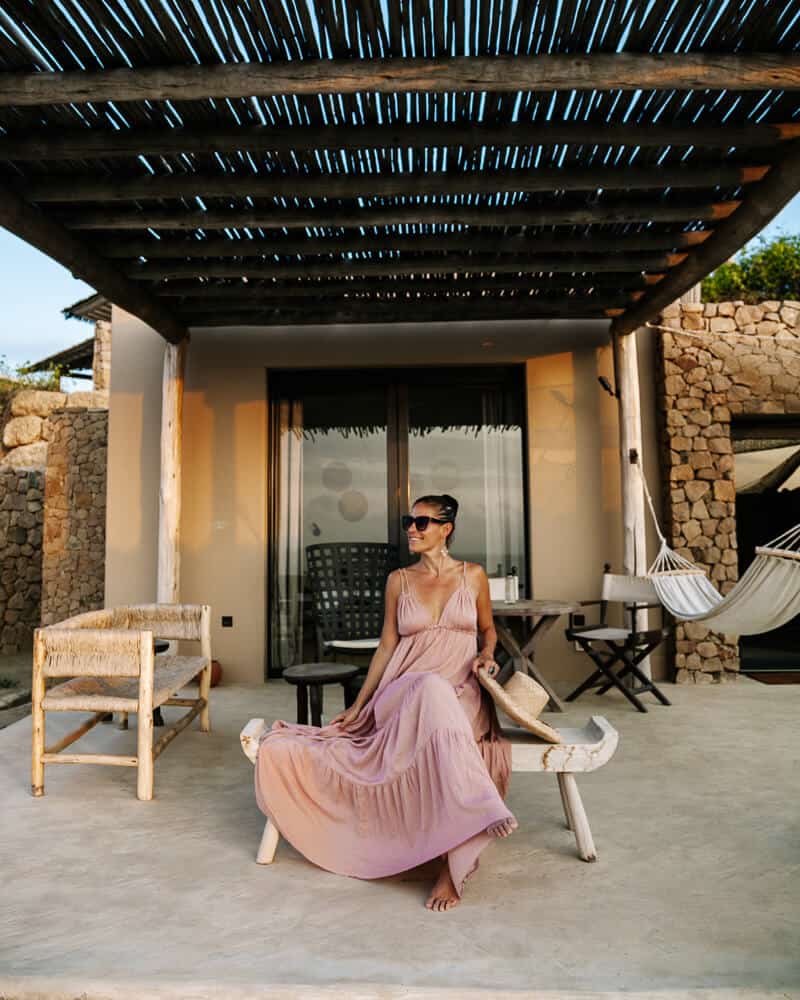

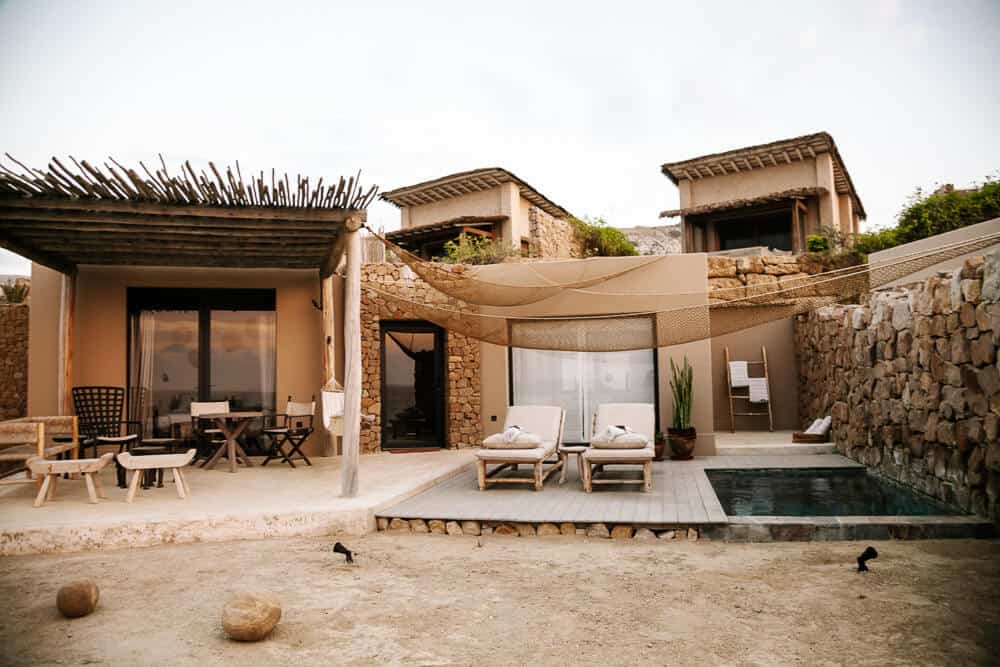
What I like about this concept is that the hotel doesn’t try to compete with the landscape. Quite the opposite: the ocean, the wind, the light, and the silence are the setting here. From this base, you can combine the different activities around Cabo Blanco with relaxing days by the sea.
Curious to learn more? In the next article, you can read all about my stay.


Want more information about staying at Inkaterra Cabo Blanco or booking an experience? Visit the website and check out Instagram for more inspiration and beautiful images.
The best time to visit Cabo Blanco in Peru depends on things the things you want to do. October through January are particularly good months for surfing. If you want to go whale watching, you should visit between July and November instead. This is when humpback whales return to the warm waters off Peru’s northern coast.

If you want to combine both activities, you’ll need to find a compromise. October and November are interesting months because you have a good chance of seeing whales as well as catching some waves. The climate along Peru’s northern coast is generally warm and dry. The region has a tropical dry climate, with temperatures averaging between approximately 16 and 32°C (61–90°F).
You don’t need much time to explore Cabo Blanco itself. With two or three nights, you can comfortably combine the main experiences. On your first day, you can explore the beach and village and enjoy the sunset. On the second day, you could plan a boat trip, whale-watching excursion, or surfing activity. But if you really want to enjoy the peace and the surroundings, try to stay for at least three nights.

If you have more time, I would set aside four nights and and include El Ñuro, Los Órganos, and Vichayito on your Cabo Blanco in Peru things to do list.
Cabo Blanco is located in the Piura region, about 25 miles north of Talara. From the Pan-American Highway, take the road toward the coast at El Alto. The final stretch follows a paved road downhill toward the bay.
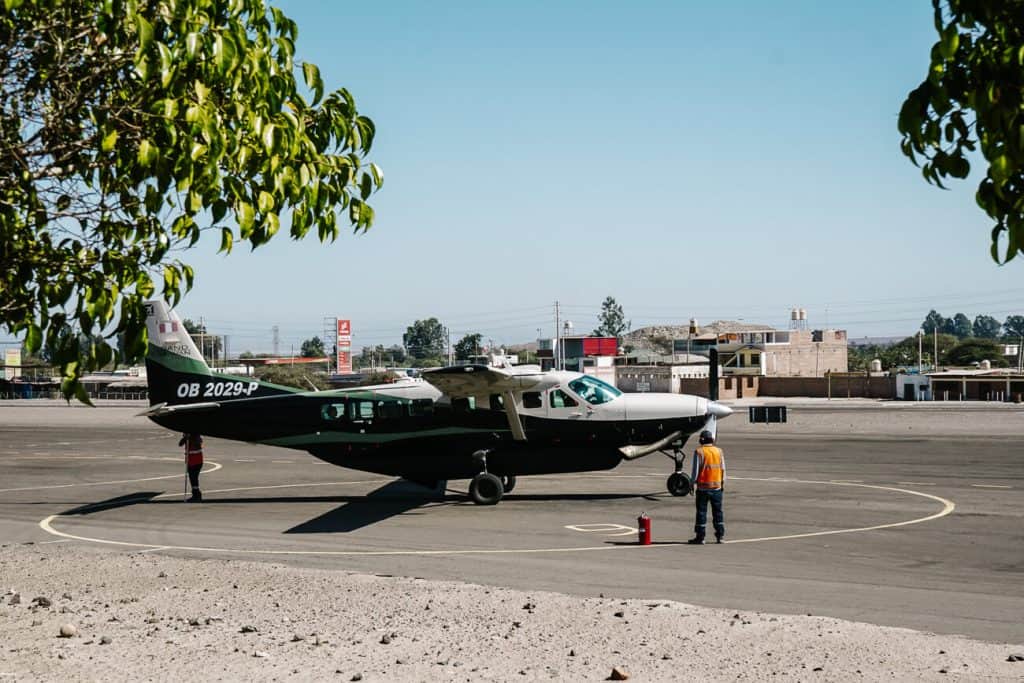
Cabo Blanco is easy to visit from Máncora as a day trip or a short stop on a road trip along Peru’s northern coast. From Lima, you can fly to Talara in about 1.5 hours, followed by an approximately one-hour drive to Cabo Blanco. The drive from Piura takes about three hours.
Cabo Blanco in Peru is not a destination for checking off a long list of things to do and attractions. You come here for the ocean, the waves, the fishing boats, the whales, and the remarkable story of a village that once became world-famous for sport fishing and Ernest Hemingway. With the arrival of Inkaterra, Cabo Blanco is getting a new boost. But hopefully, it will remain a hidden gem for a long time to come.
Cabo Blanco is small and easy to combine with other destinations along Peru’s northern coast. You could also visit El Ñuro, Los Órganos, Vichayito, or the busier Máncora. Cabo Blanco is small, but it is precisely the combination of nature, history, and the peaceful atmosphere of the Pacific that makes it one of the most special places on Peru’s northern coast.

Planning a trip to Peru or just starting your research? In the next travel guide, you’ll find everything you need to know about traveling to Peru, including practical tips, essential travel info, and inspiration for where to go and what to see. Hopefully, my articles will help you get the most out of your trip, or convince you to add Peru to your travel bucket list.
Did you enjoy reading this travel guide with tips and things to do in Cabo Blanco Peru? Let me take you on a further journey along the most beautiful destinations and attractions in Peru in the next articles.
This article may contain affiliate links. If you purchase something using one of our links, we may receive a commission at no extra cost to you, which helps us keep this blog alive. Thank you for your support! Please see our disclosures for more information.
Are you interested in the world? Do you want to learn more about a country and its culture? Let me take you on a journey with Passport the World.
As a travel reporter, producer and tour guide, I have been traveling around the world for the last 20 years, looking for the most scenic places and stories that are worth sharing. In Passport the World, I am guiding you along scenic and cultural places, cities, art, viewpoints, hiking trails and unique experiences. To help you get the most out of your travels or to just get to know a country and culture better!


Are you interested in the world? Do you want to learn more about a country and its culture? Let me take you on a journey with Passport the World.
As a travel reporter, producer and tour guide, I have been traveling around the world for the last 20 years, looking for the most scenic places and stories that are worth sharing. In Passport the World, I am guiding you along scenic and cultural places, cities, art, viewpoints, hiking trails and unique experiences. To help you get the most out of your travels or to just get to know a country and culture better!