Buenos Aires is one of those cities where every neighbourhood has its own character and atmosphere. Walking through the streets of the Argentine capital, you discover a mix of history, art, gastronomy and porteño vibe that is unlike anywhere else. Whether you are looking for architecture, great restaurants, markets, parrillas or lively squares, you will find it here. But where should you stay when visiting Buenos Aires? Which areas are pleasant and safe? In this guide, I’ll take you through the best neighbourhoods in Buenos Aires, with tips for things to do, local vibes, unique addresses, and my favorite boutique hotels. Hopefully, it helps you find the right place for your trip.
Buenos Aires is huge and diverse, with neighbourhoods that differ greatly in atmosphere. Because the city is so large, it is important to think in advance about what you want to see and do in Buenos Aires. Buenos Aires is the city I called home for many years and still visit regularly. In this guide, I’ll share my favourite neighbourhoods and places to stay, including hotel tips, so you can enjoy everything this metropolis has to offer.
San Telmo is one of the oldest and most charming neighbourhoods in Buenos Aires and a fantastic place to stay. Especially if you are visiting the city for the first time and want to explore the city centre at a relaxed pace. The heart of the neighbourhood is Plaza Dorrego, where musicians and dancers regularly perform tango. Calle Defensa and Calle Balcarce are the main streets leading to the square, but be sure to wander into one of the cobbled side streets for antique shops, ateliers, street art, authentic bars and even more tango vibes. This is the Buenos Aires you are looking for.

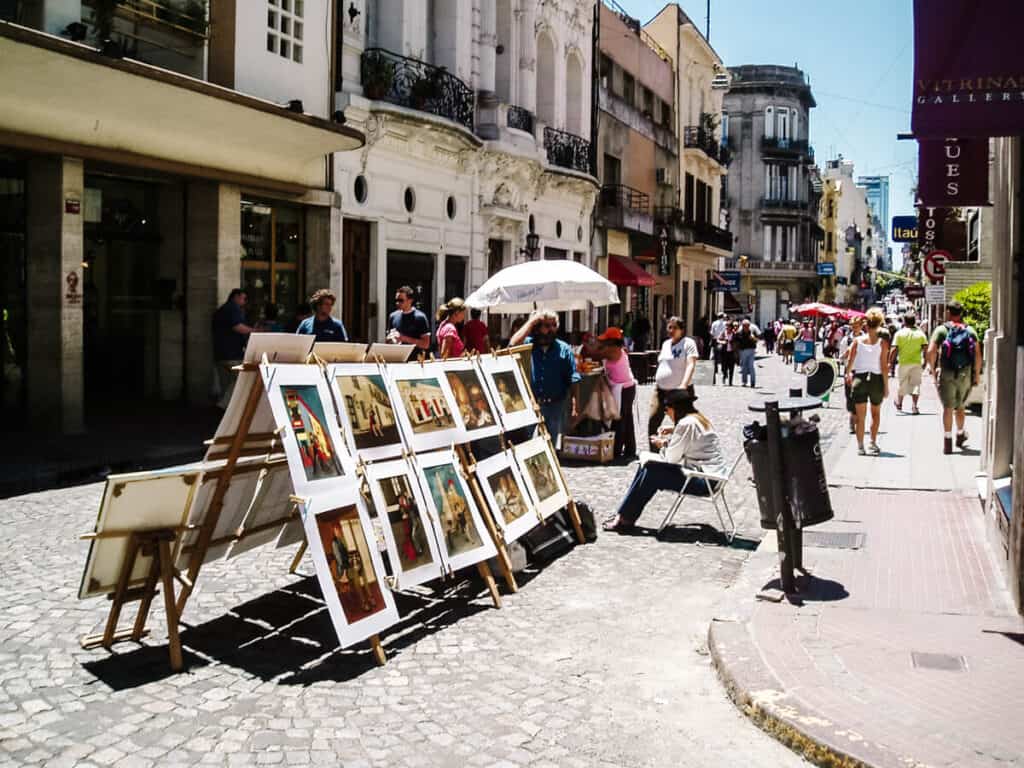
Also visit the San Telmo indoor market on Defensa, which occupies an entire block between Estados Unidos and Carlos Calvo. Try a classic parrilla and enjoy a tango show in the evening at Bar Sur, El Viego Almacen of La Ventana. On Sundays, Plaza Dorrego turns into a lively market full of antiques, live music and tango performances, while Calle Defensa fills with stalls, street musicians and performers.


Tip: If it fits your itinerary, try to visit San Telmo at least once during the week and once during the weekend. You will notice the neighbourhood has two completely different faces.
San Telmo is located south of the city centre, around Defensa, Humberto 1° and Plaza Dorrego.
One of the nicest neighbourhoods, and the area where I lived for years in Buenos Aires, is Palermo. Palermo i Buenos Aires consists of several sub-neighbourhoods, including Palermo Soho, Palermo Hollywood and Palermo Chico. You don’t come here for major sights, but for the atmosphere. Palermo Soho covers the blocks around Plaza Armenia and Plaza Serrano and is packed with trendy boutiques, small theatres, bars and restaurants. Across Avenida Juan B. Justo lies Palermo Hollywood, the place to be for lovers of good restaurants and cocktail bars.
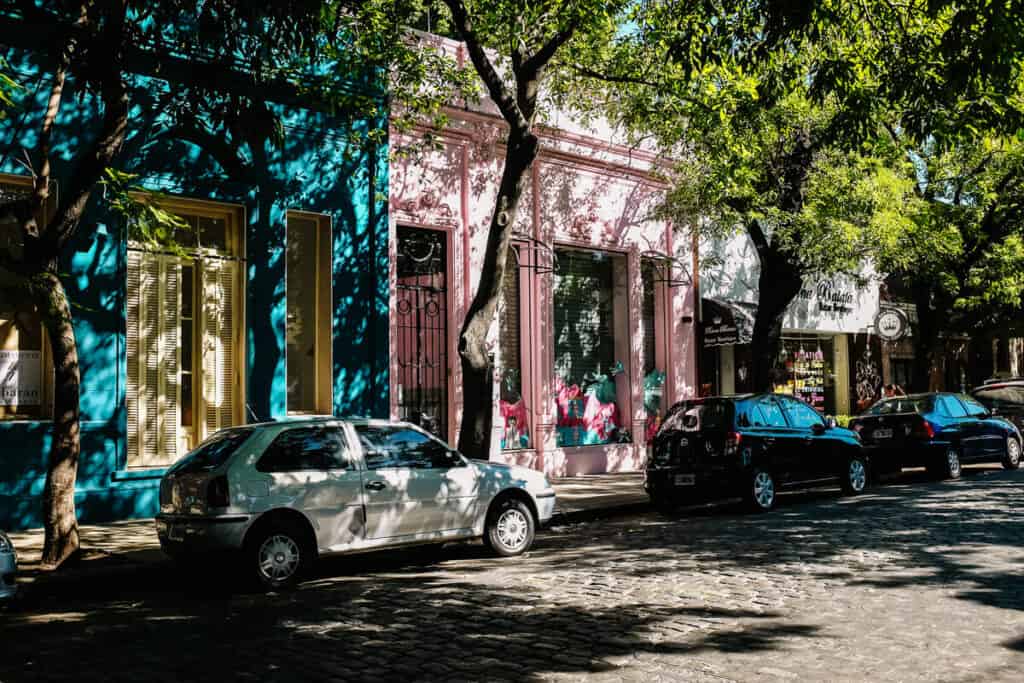
It feels like a new spot opens every day in this area, and the choices are endless. Take your time to stroll through the tree-lined streets, shop, have a drink on one of the many terraces and decide where to have dinner that evening. Don’t forget the Bosques de Palermo, a green oasis with lakes, rose gardens and walking paths.
Palermo is located in the north of Buenos Aires and is divided into Palermo Soho (around Plaza Serrano and Plaza Armenia and the streets Gurruchaga, El Salvador and Honduras) and Palermo Hollywood (between Juan B. Justo, Córdoba, Dorrego and Santa Fe).
La Recoleta is one of the most elegant neighbourhoods in Buenos Aires. This area is often referred to as the Paris of Buenos Aires because of its strong French influences in architecture. One of the most famous landmarks in La Recoleta is the Cementerio de la Recoleta, known for its architectural masterpieces and the graves of famous Argentines, including Eva Perón. Around the cemetery, you will find Avenida Alvear with its classic buildings, stylish cafés for coffee and medialunas, and cultural highlights such as the Museo Nacional de Bellas Artes and the Centro Cultural Recoleta.

Tip: Try to visit La Recoleta during the weekend as well. On Saturdays and Sundays, a large market takes place at Plaza Francia, the square in front of the cemetery, selling beautiful handmade products and designs.
La Recoleta is located northeast of the city centre, with important streets such as Avenida Alvear, Junín and Avenida del Libertador.
La Boca is one of the most colourful neighbourhoods in Buenos Aires, where art, football and culture come together. If you have seen images of the city, chances are you have already come across El Caminito: a lively street filled with brightly coloured houses made of wood and corrugated metal, surrounded by tango dancers, street musicians, stalls and ateliers. El Caminito, which means “the little path,” lies at the heart of this neighbourhood, which was once a working-class area where the first European immigrants arrived.
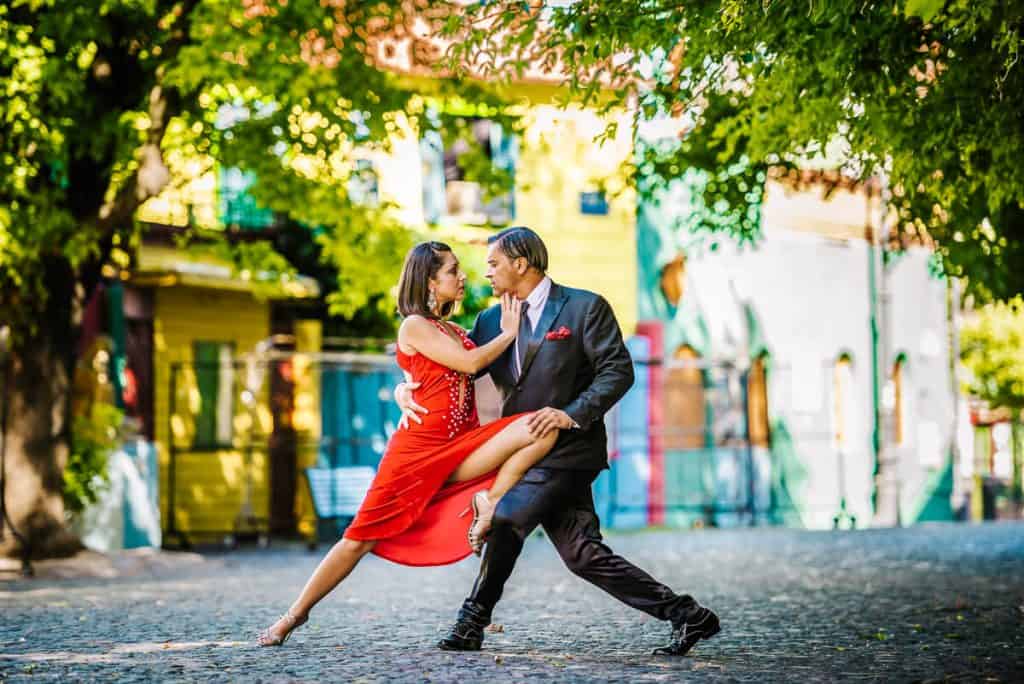

Step inside one of the conventillos (traditional shared houses), try street food such as empanadas and choripán, enjoy a traditional lunch at El Gran Paraíso and admire murals of Diego Maradona. The neighbourhood is also a pilgrimage site for football fans, as it is home to the famous Boca Juniors and La Bombonera‑stadium, and still breathes that raw, creative energy.
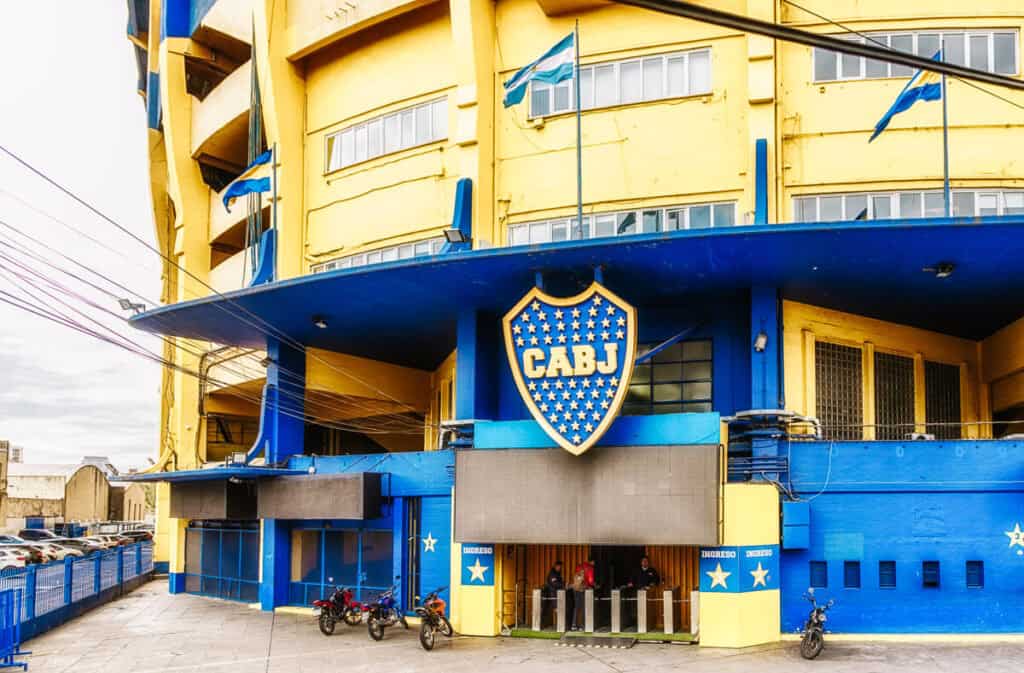
La Boca is, however, one of the most populair places to visit in Buenos Aires, so expect crowds, especially on weekends. Still, a visit to La Boca is absolutely worth it, especially if it’s your first time in Buenos Aires.
Note: Stay within the tourist area in La Boca, where the tourist police ensure safety. The neighbourhood is large, and serious robberies do occur in other parts.
As nice La Boca is to visit, it is not a neighbourhood where you want to stay overnight. If you are looking for accommodation nearby, it’s better to stay in neighbourhoods such as Puerto Madero or San Telmo.
La Boca is located in the southeast of the city, around El Caminito and the area surrounding the La Bombonera stadium.
You can reach it quickly from the city centre, but once you arrive, it feels like a different city altogether. Puerto Madero is one of the most modern neighbourhoods in Buenos Aires. Once a decaying harbour area, it is now a district filled with glass towers, wide promenades and excellent riverside restaurants. Puente de la Mujer is one of the most photographed bridges in the city, especially at sunset. Along the waterfront, you can walk or cycle while enjoying views of boats and design bridges. On the terraces and in the restaurants, you can enjoy fish, steaks and international dishes with a luxurious touch.
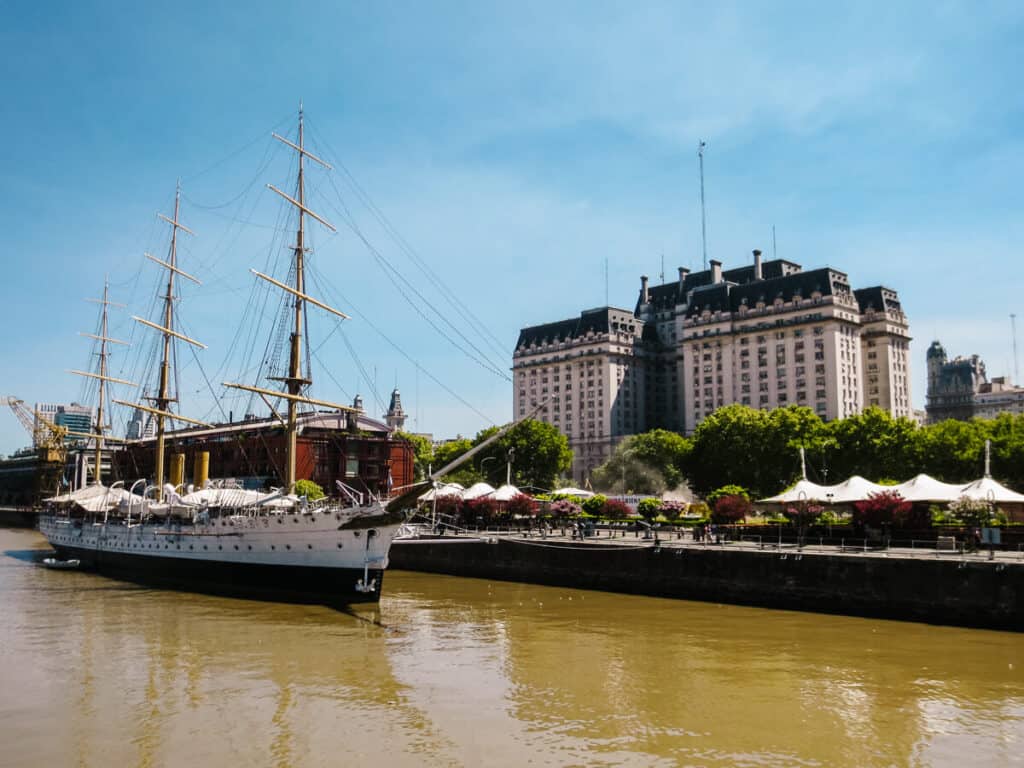


Puerto Madero is located directly along the water, just east of the historic centre, along Avenida Alicia Moreau de Justo and the waterfront promenade.
Looking for a quieter side of Buenos Aires? Then Belgrano is a pleasant neighbourhood to explore. Belgrano is not a neighbourhood of highlights, but a place where you observe daily life. Away from the tourist routes, you will find wide avenues with stately houses and parks. Around Barrancas de Belgrano, you really feel that calm atmosphere, with benches under old trees and sometimes live tango on weekends. Around Avenida Cabildo, you can wander past boutiques, bookshops, coffee bars and traditional eateries for a cafecito or lunch. Belgrano is slightly farther from the centre, which can make it a pleasant base.
Belgrano is located north of Palermo, with important roads such as Avenida Cabildo, Cabrera and Juramento.
Villa Crespo is a neighbourhood in Buenos Aires that borders the popular Palermo but has a character all its own. You’ll stroll past specialty coffee bars, local boutiques, street art and classic parrillas where locals dine. Around Avenida Corrientes, you’ll find plenty of shops, from local fashion designers and bookshops to surprising stores.


One of my favorite places is Mercado de las Pulgas, where you can browse among vintage furniture and design finds. What I personally love about Villa Crespo is its location: quiet, yet within walking or cycling distance of Palermo and other lively parts of the city.
Villa Crespo is located west of Palermo and borders neighbourhoods such as Chacarita and Almagro. Important streets include Avenida Corrientes, Avenida Juan B. Justo and Avenida Scalabrini Ortiz.
Almagro is one of the most authentic neighbourhoods in Buenos Aires. It feels local and relaxed, with wide streets, classic residential buildings and a strong sense of community. It’s a lovely place to walk, have a coffee or simply observe daily city life.
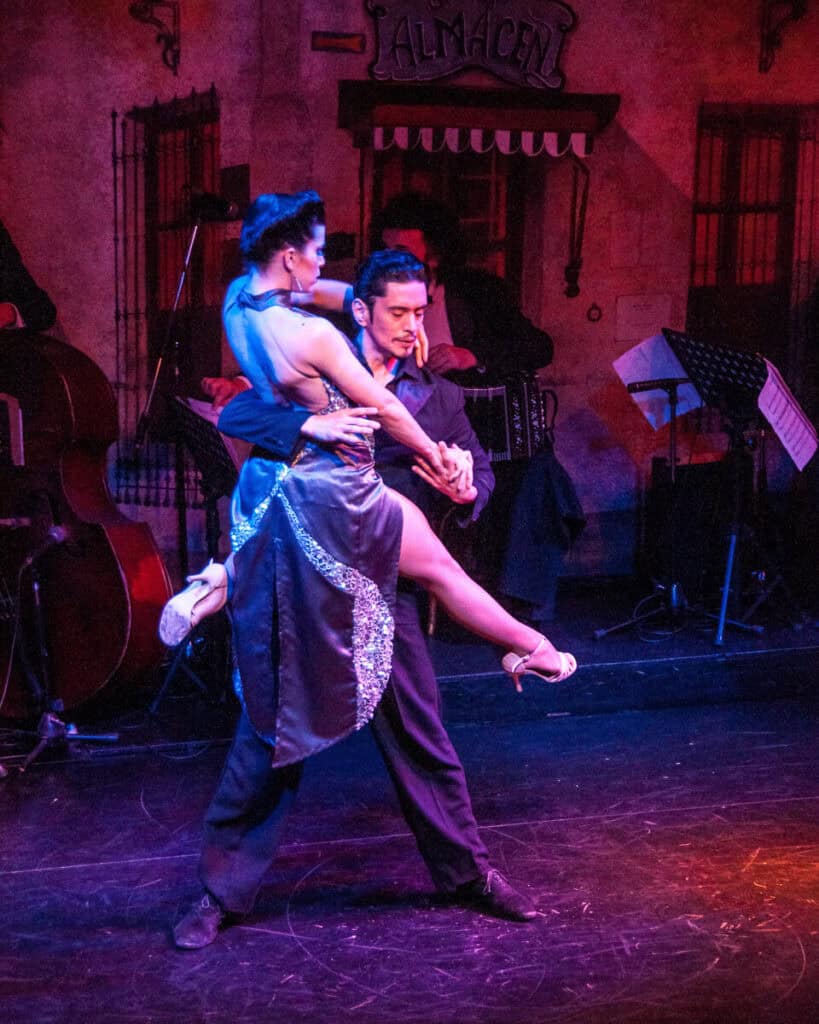

Almagro is also known as one of the birthplaces of tango. You’ll still find small traditional cafés and milongas here, as well as numerous restaurants, bakeries and cultural venues. Almagro is quiet yet full of atmosphere, with good connections to other parts of the city.
Want to see a tango show? My personal favourites are El Viego Almacen and La Ventana in San Telmo for an authentic setting, and the elegant Madero Tango in Madero Tango.
Almagro is located west of the city centre and borders neighbourhoods such as Balvanera, Caballito and Boedo. Important arteries include Avenida Corrientes, Avenida Rivadavia and Avenida Medrano, which provide good connections to other neighbourhoods in Buenos Aires.
The centre of Buenos Aires (Microcentro and surroundings) has a completely different atmosphere compared to neighbourhoods like Palermo, Villa Crespo or Almagro. It is busy, lively and sometimes chaotic, but no visit to the city is complete without exploring this area. Here you’ll find many of Buenos Aires’ most famous landmarks, such as Plaza de Mayo, Casa Rosada, the Catedral Metropolitana and the historic streets of San Telmo that seamlessly connect to it. The centre is a mix of European architecture, broad avenues and squares, combined with museums, shops and cafés. During the day, it’s constantly buzzing with activity.
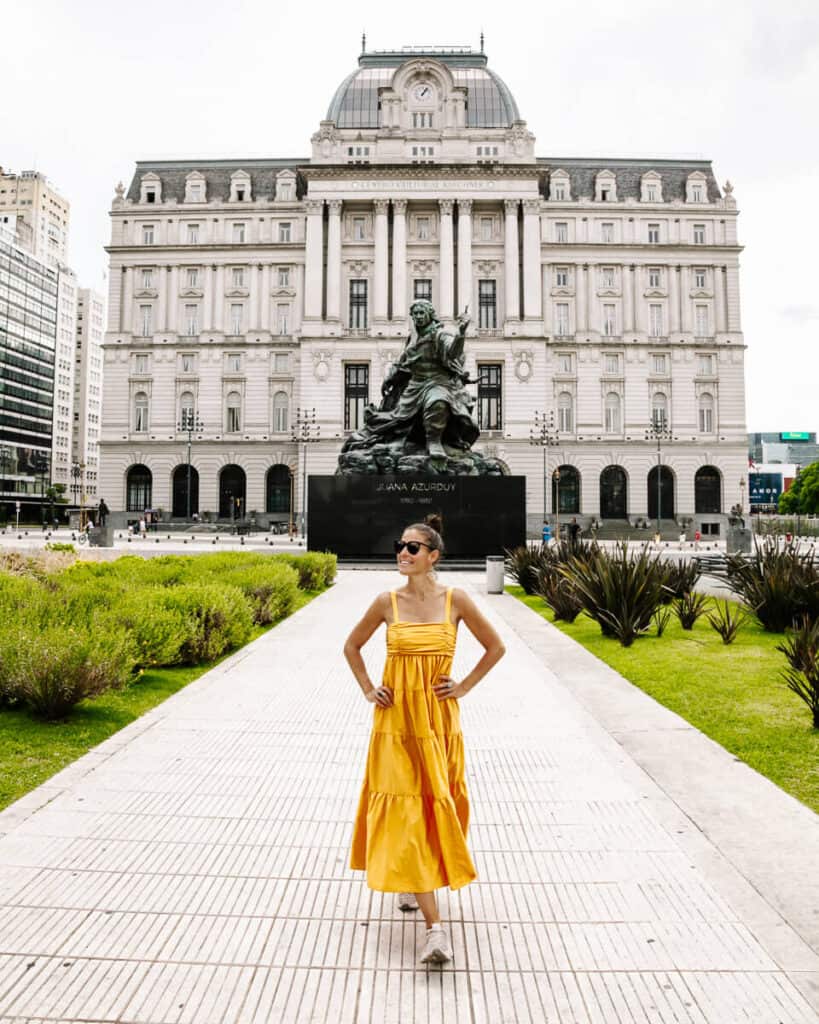

Personally, I don’t prefer staying in the centre. It’s less cosy and atmospheric than neighbourhoods like Palermo, Villa Crespo or La Recoleta and can be very busy, especially on weekdays. Still, it is a practical choice: accommodations such as Tango de Mayo Hotel are often more affordable, and many highlights are within walking distance. Just be mindful of your belongings and use taxis at night.
Microcentro lies at the heart of Buenos Aires and forms the city’s financial and historical centre. The area is bordered by major avenues such as Avenida 9 de Julio, Avenida Corrientes, Avenida de Mayo and Avenida Leandro N. Alem, making almost all parts of the city easily accessible.
Buenos Aires is a large city, but getting around between neighbourhoods is very easy thanks to the Subte (metro). For places not directly served by the metro or late at night, taxis and ride-apps are comfortable and safe options. Buses (colectivos) run throughout the city and are perfect for short distances, though they can be extremely crowded during rush hour. You’ll also discover Buenos Aires and its neighbourhoods best on foot or by bike.
Buenos Aires is a cosmopolitan city where you can spend days exploring. But how do you make the most of your visit? What should you definitely see and do? In the next travel guides, you’ll find all my tips for the best things to do in Buenos Aires, Argentina.
Are you planning a trip to Argentina or simply curious about what the country has to offer? In the next travel guide, you’ll find practical tips, inspiration, and helpful advice to make your journey through Argentina smooth and enjoyable. I hope my articles inspire you to add Argentina to your bucket list and help you make the most of your trip.
Do you want to learn more about this beautiful country? With Passport the World I am taking you on a journey to discover Argentina. Discover more in my next articles.
This article may contain affiliate links. If you purchase something using one of our links, we may receive a commission at no extra cost to you, which helps us keep this blog alive. Thank you for your support! Please see our disclosures for more information.
Are you interested in the world? Do you want to learn more about a country and its culture? Let me take you on a journey with Passport the World.
As a travel reporter, producer and tour guide, I have been traveling around the world for the last 20 years, looking for the most scenic places and stories that are worth sharing. In Passport the World, I am guiding you along scenic and cultural places, cities, art, viewpoints, hiking trails and unique experiences. To help you get the most out of your travels or to just get to know a country and culture better!


Are you interested in the world? Do you want to learn more about a country and its culture? Let me take you on a journey with Passport the World.
As a travel reporter, producer and tour guide, I have been traveling around the world for the last 20 years, looking for the most scenic places and stories that are worth sharing. In Passport the World, I am guiding you along scenic and cultural places, cities, art, viewpoints, hiking trails and unique experiences. To help you get the most out of your travels or to just get to know a country and culture better!